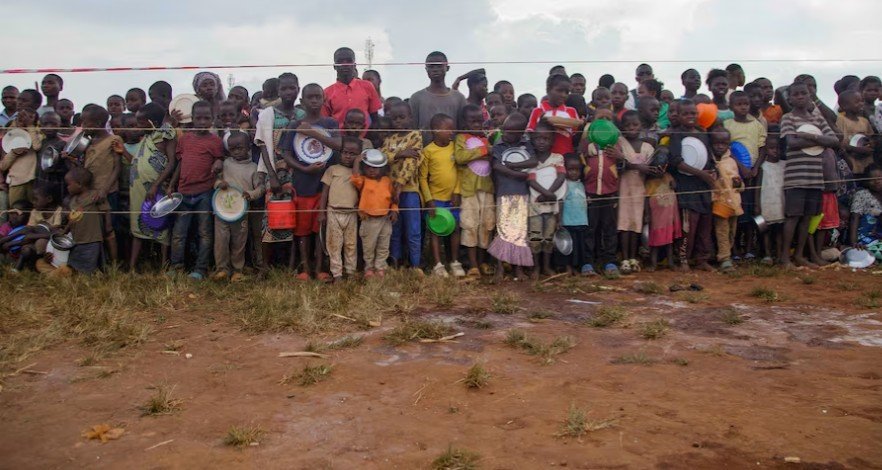
South Africa’s Child Support Grant (CSG) reaches over 13 million children but remains below the food poverty line, leaving many households struggling to afford basic nutrition.
According to the latest Child Gauge Report by the Children’s Institute at the University of Cape Town, child poverty rates dropped after the CSG was introduced in 1998. However, after the Covid lockdown, an additional 1.2 million children fell below the food poverty line. Despite social grants and school feeding programs, child hunger and malnutrition remain alarmingly high, with 29% of children under five stunted.
The CSG remains South Africa’s largest poverty-alleviation tool for children, but it is no longer sufficient.The grant reached 13 million children in 2024 but is still unable to keep pace with the rising cost of living.
The CSG currently provides R560 per month, falling short of the food poverty line of R796. It is also far below the estimated cost to meet a child’s nutritional needs, calculated by the Pietermaritzburg Economic Justice and Dignity Group, which ranges from R826 to R1,085 depending on age.
The Child Gauge Report highlighted that child poverty rates fell significantly after the CSG’s introduction. In 2019, 33% of children lived below the food poverty line compared to 53% in 2003. “The reduction in child poverty over this period was mainly due to the massive expansion of the CSG,” the report said.
Yet, many children remain poor, and the Covid-19 lockdown caused a sharp rise in child food poverty to 39% in 2020. Rates stabilized in 2021 but rose again in most provinces through 2024.
“Across all poverty measures, rates in 2024 were higher than in 2019. This represents an additional 1.2 million children below the food poverty line, and an extra 3.1 million children below the upper-bound poverty line,” the report noted.
Regional differences are stark. Using the upper-bound poverty line of R1,634, over 75% of children in the Eastern Cape, KwaZulu-Natal, Limpopo, and North West are poor. Gauteng and the Western Cape have lower rates but saw sharp increases: from 35% to 54% in Gauteng and from 27% to 41% in the Western Cape between 2019 and 2024.
Poverty is highest in rural former homelands, where 86% of children live below the upper-bound poverty line. Urban poverty also rose sharply, with 56% of children below the upper-bound poverty line in 2024, up from 41% in 2019, and 25% living below the food poverty line, up from 21% in 2019.
Children experiencing hunger face risks of stunting, overweight, and micronutrient deficiencies. The 2021-2023 National Food and Nutrition Security Survey reported 29% of children under five were stunted. Even households that do not report hunger may not have access to adequate nutrition, putting children at risk of malnutrition.
While social grants remain the main income source for poor households, the gap between the CSG and the true cost of raising a child continues to grow. Researchers concluded that raising the CSG to at least meet the food poverty line is crucial to combating child hunger and malnutrition.