After adopting a new constitution in 2023, Mali now recognises 13 official languages. French may no longer be on that list, but the language of the former colonial rulers is still dominant everywhere, especially in schools.
Authorities in Mali are hoping that technology can help change that by enabling students to learn to read and write in local languages they already use daily at home and with friends.
To make this a reality, the Ministry of Education has partnered with RobotsMali. The tech organisation has already created more than a hundred stories in Bambara, the most commonly spoken language in Mali for students to read in school.
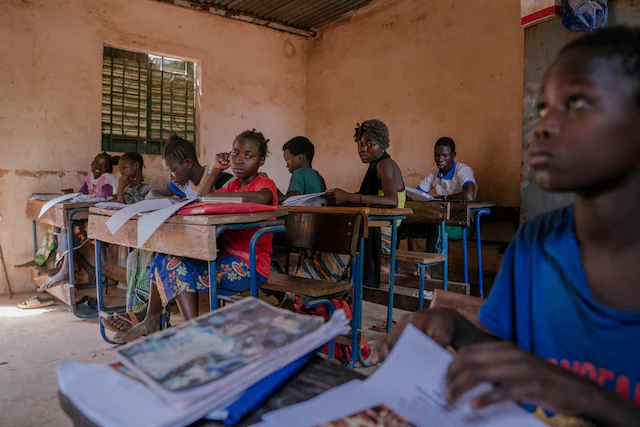
“It helps me talk better with my friends. All of this is good,” said 13-year-old student Clarisse Yasségué Togo. “At school, we only speak French.”Tools like ChatGPT and Leonardo are being used to write, translate, and illustrate the stories.
“Since the stories also come with illustrations, it teaches students to quickly connect words with their meanings,” explained RobotsMali’s Mamadou Dembele.
The goal is to solve the shortage of books in Malian languages.
After gaining independence from France in 1960, there were several attempts to introduce Bambara and other local languages into education. But those efforts repeatedly failed because of poor funding and a lack of political commitment.
“Bambara is our language. We should give it priority,” said 17-year-old student Fatoumata Sacko.Mali’s relationship with France has shifted dramatically in recent years, particularly after the military coups in 2020 and 2021.
The RobotsMali project highlights the country’s desire to move away from the lingering influence of France.“It makes me proud to see my younger siblings learning with so much excitement,” Dembele said.