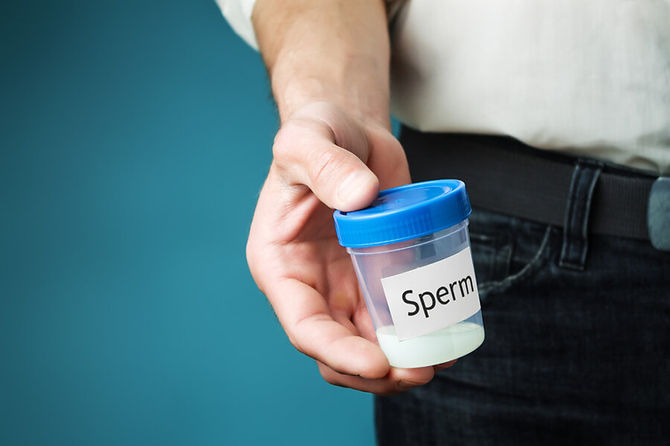
A sperm donor whose samples were used to conceive nearly 200 children across Europe unknowingly carried a dangerous cancer-linked genetic mutation, leaving dozens of families stunned by the long-term health risks now emerging.
An investigation by the BBC, alongside several public service broadcasters, revealed that the donations were made through Denmark’s European Sperm Bank (ESB) and distributed to 67 fertility clinics in 14 countries over a 17-year period. The donor, whose identity remains undisclosed, began donating as a university student in 2005 and passed all standard health checks at the time.
However, experts later discovered that he carried a mutation affecting the TP53 gene, a critical gene that helps prevent cancer by repairing damaged DNA or triggering the death of abnormal cells. When this gene is faulty, those protective mechanisms fail, increasing the risk of tumor growth.
According to the report, up to 20% of the donor’s sperm carried the mutation. Any child conceived from those samples would inherit the altered gene in every cell of their body, placing them at extremely high risk of cancer. Doctors say this condition, known as Li-Fraumeni syndrome, carries a lifetime cancer risk of about 90%, including breast cancer, leukemia, brain tumors, and bone cancers.
So far, at least 23 children have been confirmed to carry the mutation, with 10 already diagnosed with cancer. Researchers believe the real number could be much higher, as nearly 200 children were born using the donor’s sperm and not all cases have been traced.
The issue was presented at the European Society of Human Genetics conference in Milan in May 2025. Cancer genetics specialist Edwige Kasper described the situation as an alarming example of how genetic diseases can spread unchecked through fertility systems. She called for strict limits on how many families a single donor can serve and urged genetic counseling for affected children.
There is currently no global law limiting sperm donor usage, though European experts have proposed a cap of 50 families per donor. The European Sperm Bank said it sympathizes deeply with affected families and confirmed the donor was immediately barred once the mutation was identified in 2023.
Medical experts say the case highlights the urgent need for stronger and more advanced genetic screening in fertility treatments to prevent similar tragedies in the future