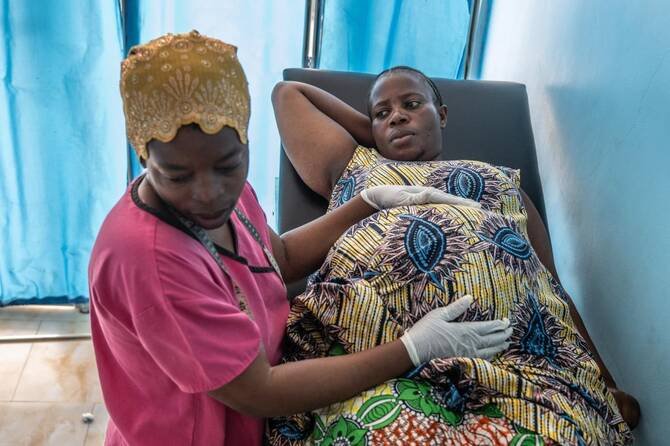
The maternity ward in eastern Congo had grown tense as Irene Nabudeba sat with her hands on her swollen belly, worried about giving birth in a city now controlled by rebels. The ongoing conflict, which worsened earlier this year, has blocked medical supplies behind the front lines and crippled basic services, including clean running water.
In Goma, once a thriving humanitarian and economic center, the local system has collapsed leaving pregnant women with fewer and fewer options.
Up until June, the Congolese government had been providing free maternity services, a lifeline many relied on to deliver safely. But when authorities failed to renew the program, access to vital healthcare collapsed almost overnight.
Freddy Kaniki, deputy coordinator of the M23 movement, told the Associated Press that the free maternity initiative “was not renewed because it was a failure.” Government officials have not responded to requests for clarification.
For expectant mothers like Nabudeba, the effects are painful and immediate. “I am seeing many women giving birth at home now because they can’t afford it. They don’t know how to get to the hospital to deliver because they ask for a lot of money,” she said. “I just found a small opportunity to come here for prenatal care because before, I gave birth by C-section and I paid a lot. I came only for this consultation, but I am almost due, and I don’t know where I will get the money to pay.”
Health workers say losing the free maternity program has destroyed years of hard-won progress. At the Afia Himbi Health Center, head nurse Franck Ndachetere Kandonyi reflected on how impactful the program once was. “It was a good project, because it even helped us boost our maternity statistics,” he explained. “Before, we were handling between eight and five deliveries, but with the project, we went up to 20 deliveries per month. Women came without difficulty because they knew everything would be free.”
Today, attendance has dropped drastically, and many women are forced to deliver at home, often without skilled help.
At the Rehema Health Center, expectant mother Ernestine Baleke, three months away from giving birth says she is frightened by the expenses she cannot meet. Pregnant with her ninth child, she wonders how she will navigate childbirth in a time marked by displacement, hunger, and growing insecurity.
The broader humanitarian situation is only getting worse. Earlier this year, M23 fighters captured both Goma and Bukavu, marking a major escalation in the conflict.
Since 23 January 2025, intensified clashes between government forces and armed groups have pushed more than 700,000 people from their homes, according to the UN Office for the Coordination of Humanitarian Affairs. Public services have crumbled, and access to healthcare remains critically limited.