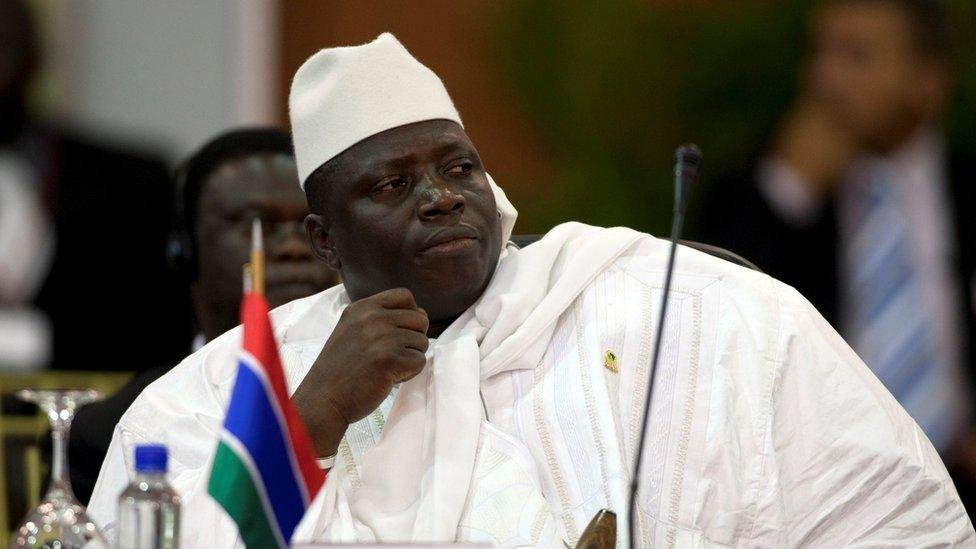
The Gambian government has issued a firm message to former exiled president Yahya Jammeh, after he recently declared that he was prepared to come back “home.”
Officials cautioned that Jammeh could face legal consequences for alleged crimes committed during his 22-year rule if he attempts to return next November.
This is not the first warning of its kind. President Adama Barrow previously threatened possible arrest and prosecution when Jammeh hinted at ending his exile five years ago.
The latest warning comes just two days after a recorded message from Jammeh was played for thousands of supporters gathered in his hometown of Kanilai. In the message, Jammeh said he plans to return to The Gambia in November 2025 and suggested he would lead a faction of his former ruling party.
While Jammeh did not reveal a specific date, he claimed to have an arrangement with organizations such as the African Union, ECOWAS, the UN, and the EU—allegedly allowing his return. He also claimed that his exile was originally meant to last only six months.
Jammeh left The Gambia in January 2017 and relocated to Equatorial Guinea after a tense political standoff that followed the disputed 2016 election. He had initially conceded defeat to Adama Barrow before reversing his decision, pushing the country into a political crisis.
In a statement released on Tuesday, the government maintained that if Jammeh returns, he would face arrest, detention, and prosecution for serious offenses linked to his presidency, which ended in December 2016.
Officials stressed there is no deal that grants Jammeh immunity. They acknowledged that, like every Gambian citizen, he has the constitutional right to return, and that this right is recognized under international law.
However, the government emphasized that such a right does not protect him from accountability, especially in light of documented evidence and findings from the Truth, Reconciliation, and Reparations Commission (TRRC).
Authorities further reminded Jammeh that he remains a key figure in ongoing investigations after the TRRC linked him to grave human rights violations, including torture, extrajudicial killings, and other violent crimes.