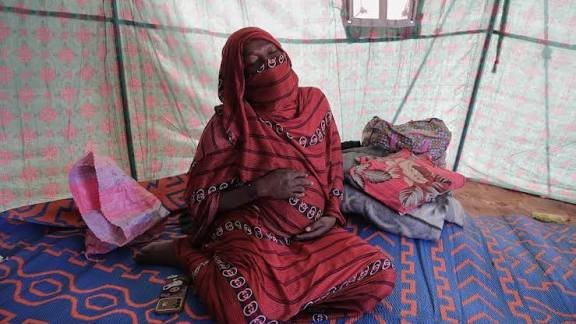
Nadra Mohamed Ahmed was seven months pregnant when she escaped the brutal violence tearing through her hometown of El-Fasher in Sudan.
After trekking nearly 40 kilometres on dangerous routes with her two young children, she finally managed to find transport that took her to a shelter far from home.
“By the time I got here, I had already lost so much blood,” Ahmed said from her tent in the overcrowded displacement camp in Al-Dabbah, northern Sudan. “I was rushed to the ICU, spent a few days there, and needed a blood transfusion.
Ahmed reached the camp two months before El-Fasher fell to the paramilitary Rapid Support Forces (RSF), who have been locked in a deadly conflict with Sudan’s army for more than two years.
More than 140 pregnant women have arrived at the Al-Dabbah camps since the fall of El-Fasher last month, according to Tasneem Al-Amin of the Sudan Doctors Network, a coalition of medical professionals monitoring the war.
Many of them show up with severe complications, especially heavy bleeding, which often leads to miscarriages, she said.
Carrying her four-year-old daughter on her back and holding her six-year-old son’s hand, Ahmed made part of her two-week journey on foot without her husband, who went missing shortly before she escaped.
“I was extremely weak on the road. I had a child on my back and another in my womb,” she said. They had nothing to eat or drink throughout much of the journey.
Ahmed is just one of countless Sudanese pregnant women struggling to safely carry their pregnancies and deliver healthy babies at a time when 80% of medical facilities in conflict zones have collapsed, according to UN agencies.
Last week, Anna Mutavati, UN Women’s Regional Director for East and Southern Africa, told reporters that many Sudanese women are now giving birth on the streets.“Thank God there’s healthcare here now,” said Ahmed, who is expecting her third child in less than a week.
Ahmed fled El-Fasher shortly after an RSF projectile struck her home, killing her sister.“We could barely gather my sister’s remains. It was horrifying,” she said, noting that the trauma pushed her to run.
People escaping El-Fasher face beatings, searches, and theft along the way by armed men, Ahmed added.
Sami Aswad, the UN Population Fund’s humanitarian coordinator for Darfur and northern Sudan, said it is difficult to know the exact number of pregnant women fleeing the city due to the constantly changing situation.
However, the agency estimates that more than 2,300 pregnant women have left El-Fasher since 27 October.