In both local and international broadcasting agencies, Rwanda is not only applauded for its robust yet strategic economic development but also for its holistic approach to sustainable economic growth. This is vehemently evidenced by sectors such as tourism, mining, industrial production, and education, which experienced a mushroom growth in a matter of a few decades. The health sector, on the other hand, has only partly developed. Although facts like a significant decline in infant mortality and malaria mitigation reveal Rwanda’s unwavering commitment to promoting health, the availability of mental health services to Rwandans and their efficacy spark an ambivalent questioning.
The following five stories are distilled from news reported by local journalists over two months, from July to September of 2025. They all have a common denominator that calls for an immediate and salient national intervention.
Case Studies

In Nyagatare District of Eastern Province, a man entered his home one late evening with a violent, bloody intent. He murdered his wife, his twelve-year-old son, and his nineteen-year-old daughter, striking them repeatedly with a hoe. As fear and regret echoed in his heart, he called his son-in-law on the phone and said, “Cry all your tears and wipe them.” He added that they had disrespected him. In that very same night, he hanged himself with a rope—on the roof of his house—and died.
Again, in the same district, a man who was officially a soldier in the Rwandan Defence Force was reported to have murdered his twenty-one-year-old wife. Neighbours said that the man had returned home from a peacekeeping mission, where he stayed for several months. Upon coming home, he accused his wife of adultery and mercilessly assaulted her during the night. Afraid that the lady’s life was at risk, neighbours intervened, rescued her, and took her to the nearby hospital, where she shortly tragically passed away.

Moreover, in Musanze District of the Northern Province, a thirty-seven-year-old woman ruthlessly murdered her thirty-nine-year-old husband. She struck him with a hoe and stabbed him multiple times with a knife. Due to compulsive emotions and anguish, she committed suicide shortly afterward with a rope. Neighbours reported that the family had experienced domestic violence and property-related conflicts before.

Not only does the problem affect married couples, but it also looms in young adults and teenagers. In Gasabo District, an eighteen-year-old Ordinary Level graduate committed suicide because of narrowly missing his target score in the O-level national examinations, falling short by just 0.5%. His parents reported that a few days after the release of national examination results, he refused to eat and locked himself in a bedroom. As local officials and police confirmed, he ingested 26 tablets, five tubes of super glue, and a bottle of glycerine. He shortly passed away, leaving his family and neighbours in a devastating horror.

Last but not least, the extent to which teenagers have recently engaged in these horrific activities is alarming. In Nyagatare District of Eastern Province, a man—who was a teacher—and his son shamefully murdered his wife. After the murder, they mutilated the corpse, cutting off her head, arms, and breasts. Later, the police discovered that some of her body parts were left in the living room, while others were awfully dumped in the family toilet. When they were detained, the man resisted arrest and was lethally shot. Locals said that the family had a record of domestic violence deeply rooted in the property-related conflicts and alcoholism.
Problem Overview
From the above stories, homicidal and suicidal acts are taking a toll in the Rwandan society. It is nearly impossible to follow trending news without bumping into a story related to homicide or suicide. It is important not to overlook a Rwandan serial killer, named Kazungu Denis, whose story trended in 2023. He was found guilty of raping, stealing, murdering, and burying more than 10 sex workers in an apartment where he lived.
Now, looking at the problem through a statistical lens, researchers find Rwandans to have complex social relationships. Due to the consequences of the 1994 Genocide Against Tutsi, roughly 25% of the population has Post-Traumatic Stress Disorder (PTSD), and one in six Rwandans lives with depression. A professor of human psychology at the University of Rwanda, Charles Rutikanga, argues that not only are genocide consequences responsible for this, but poverty and higher rates of unemployment also account for the recurring obnoxious human behaviours that eventually lead to homicides and suicides.

In the same vein, others posit that the consequences of the COVID-19 pandemic, the high cost of living, and drug abuse account for recurring depression and its associated ramifications. Eric Ntakirutimana is also a professor of psychology. He underscores that poverty and unemployment can cause a wide range of mental health problems, and he hints that counselling is the recommended measure for counteracting the problem.
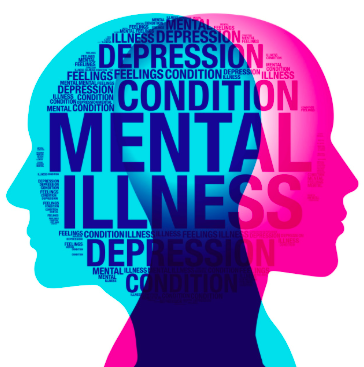
From a psychological lens, the following pattern can be identified in all cases of homicide and suicide listed in this article. Individuals were abnormally egoistic—self-absorbed and weakly integrated into society—or altruistic—strongly integrated to a cause that they can sacrifice their life for it. In his book Suicide, Émile Durkheim categorised suicide into four categories, but two of them are mostly relevant to Rwanda’s case study.

The first is egoistic suicide, which occurs when a victim feels disconnected from society. This only worsens when a person is lured into any form of addiction. Then, a cause such as rejection, loss, et cetera sparks homicidal and suicidal thoughts. On the other hand, altruistic suicide happens when a person is devoted to a cause that a single disappointment, ignites a cascade of suicidal thoughts, possibly leading the victim to take their own life. An instance that epitomizes this scenario is the teenager who took his own life.
Conclusion
Still waters run deep. Suicide and domestic homicide cases that occurred in just two months were so numerous that if every case were included, this article would become overwhelmingly long and emotional. There are a plethora of measures that the Ministry of Health can indeed implement to tackle this challenge. There are almost no psychiatric hospitals, and their services cost an arm and a leg. The option of strengthening mental health access through integrating mental health into primary care and expanding psychological services to the public is a ace. Given that Rwandans traditionally like to keep soul-crushing problems to themselves, mass sensitization about the benefits of opening up and speaking what lies deep in the heart is equally important. Finally, mental health services should be included in the wide scope of medical care accessible to Rwandans through the Community-Based Health Insurance—Mutuelle de Santé.
NSHIMYUMUREMYI Emmanuel [Opinion]