The Rwanda Development Board (RDB) has ordered eight foreign-owned operators to take out roughly 1,000 slot machines from the country. These operators have slightly over a month to complete the process, with the final deadline set for December 2025.
This move is part of a wider crackdown on unlicensed and non-compliant gambling machines across Rwanda.
Updated gambling rules render old licenses invalidRecent changes to the country’s gambling regulations have voided many existing licenses because the machines no longer meet the requirements under the new 2024 gambling framework.
Officials found that some operators placed slot machines in locations not authorized for gaming activities or exceeded the number of machines permitted under their permits.
Jacques Habyarimana, Head of Gaming Activities at the RDB, stated: “These companies have been given a three-month deadline, starting in September 2025, to withdraw their machines and repatriate them to countries where they are allowed. By December, none of these machines should remain in Rwanda.”
Many of these companies had previously operated their machines in bars, small arcades, and retail shops under older agreements. However, those older licenses are no longer recognized, as the updated regulations now require slot machines to operate only in fully licensed casino facilities to ensure responsible gambling.
Nationwide operation targeting illegal machinesThis update comes after a nationwide effort carried out last month by the RDB, working together with Enviroserve Rwanda, targeting more than 7,000 unlicensed slot machines.
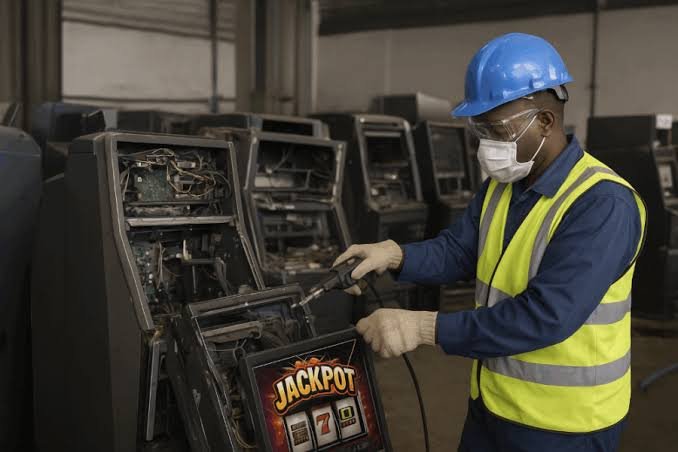
The seized machines are being dismantled and recycled to reduce gambling-related risks and ensure safe disposal of electronic waste.
Officials recently monitored the dismantling process at a recycling plant located in Bugesera District. Olivier Mbera, Country General Manager of Enviroserve Rwanda, explained: “We are currently dealing with over 7,000 slot machines. So far, we have collected more than 3,500 from Kigali and the Eastern Province.”
The collection campaign, which began two months ago, is now expanding to include the Southern, Western, and Northern provinces.