Rwanda’s Minister of Information, Communication, Technology (ICT) and Innovation, Paula Ingabire, has called on African nations to stop being just consumers of technology and instead position the continent as a global leader in digital innovation.
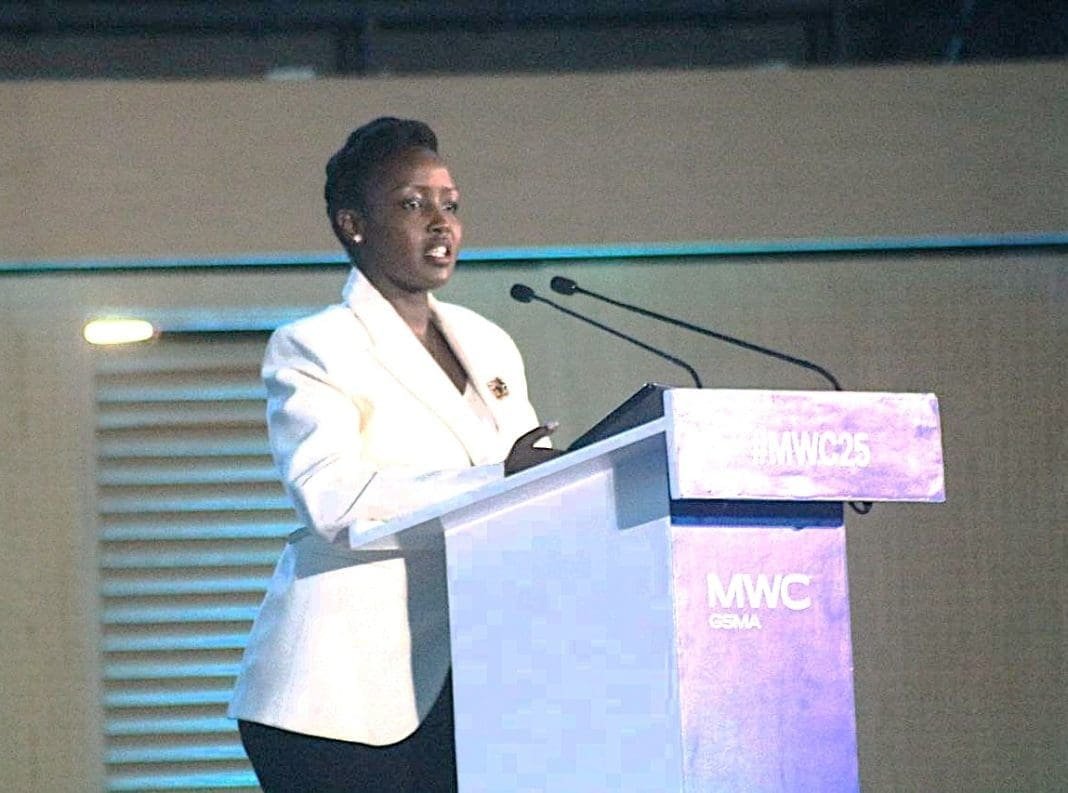
Speaking at the Mobile World Congress (MWC) Africa 2025 in Kigali, Ingabire delivered a strong message to African leaders, entrepreneurs, and innovators, urging them to build homegrown digital solutions rather than depending on imported technologies.
The three-day event, themed “Converge, Connect, Create,” brought together more than 4,000 delegates from 109 countries, highlighting Africa’s rising influence in the global tech ecosystem. “The future of mobile in Africa will be defined by collaboration,” Ingabire said.
“We must converge across governments, industries, and innovators. We must connect people, ideas, and markets. And we must create solutions that are designed in Africa, built for Africa, and scaled to the world.”
Ingabire emphasized Rwanda’s remarkable progress in digital transformation, noting the country’s growth from 500,000 active 4G users in 2023 to 5 million by mid-2025, a tenfold rise fueled by policy reforms, competition, and strategic public-private partnerships.
Rwanda has also secured 60 gigabytes of bulk Internet capacity and supported MTN Rwanda’s 5G rollout, ensuring faster and more affordable connectivity nationwide. Nearly 1,000 health centers and 4,000 schools are now connected to high-speed Internet, transforming lives across both cities and villages.
“Behind these numbers are real lives being transformed,” she added. “Rwanda’s vision is to create a competitive, inclusive broadband ecosystem that leaves no one behind.”
She also spotlighted the Rwanda Digital Service Programme, which aims to train 4.5 million citizens in digital literacy. Through a $1 million innovation initiative launched in 2024, the country is empowering African developers to design digital products that serve both continental and global markets.
Ingabire’s remarks struck a chord across Africa, as she challenged nations to move from being passive technology markets to becoming active creators of innovative, world-class digital products rooted in African creativity and identity.